A winter trip to Colombia
The approach into Medellín was surreal, almost mythical. Clouds of fog sprawled through the valleys and dense green forests lay against the slopes. Medellín is in the Andes and known as The City of Eternal Spring. Rain fell slowly across the valley. We landed and I spent the next two hours under fluorescent lights, leaning on my roller bag like a cane while I waited in the passport control line. This city, country, this continent were mythical. I’d never been.
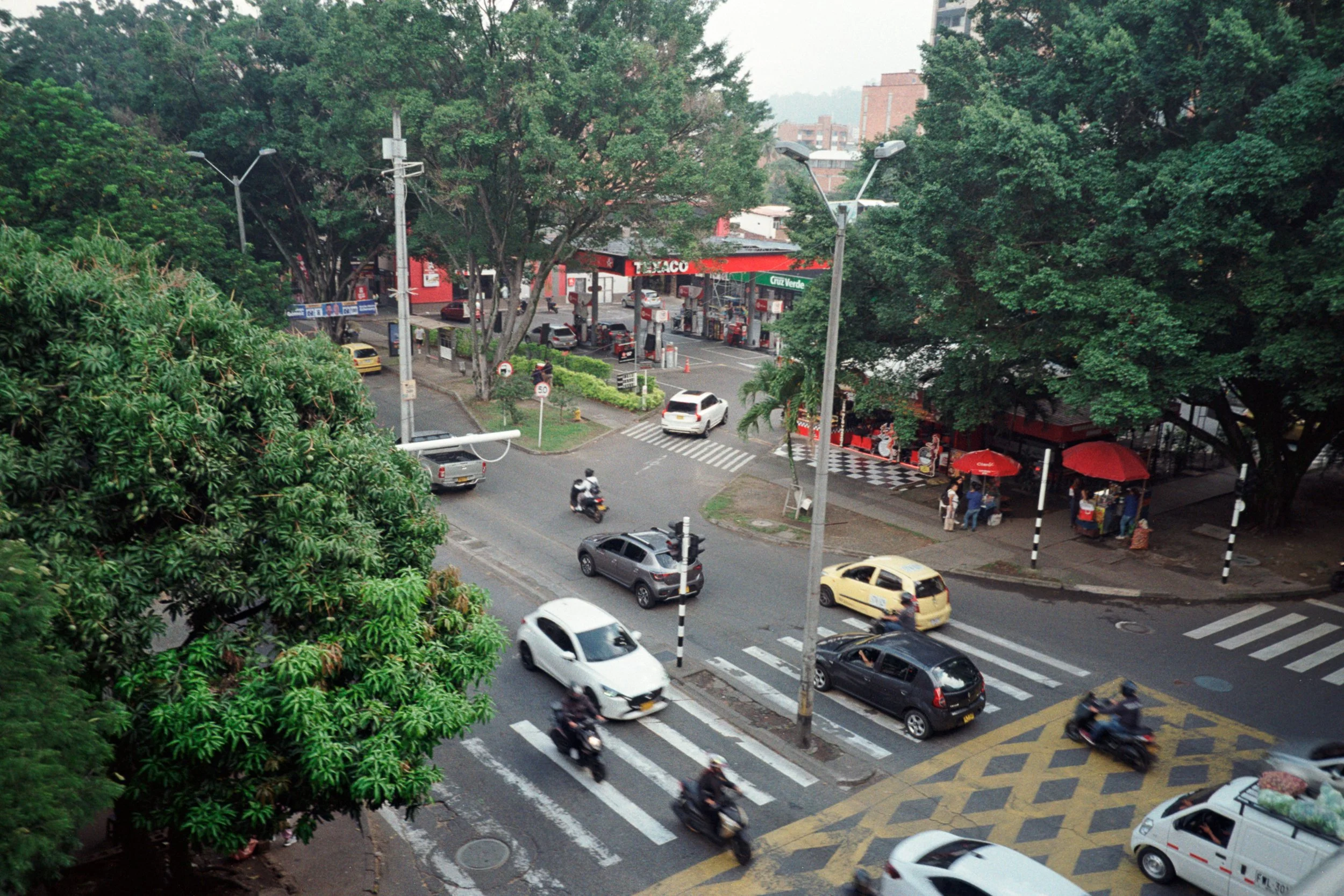
The scene near our hotel
Windows wrapped around the walls in our corner room. We were on the fourth floor of a small hotel, wedged between a busy road and the quieter neighborhood behind. The streetside trees reached up to our windows, and out over their tops we could see for miles across the city. In the distance, the surrounding hillsides were covered with neighborhoods that had expanded outward and upward. With the windows pitched open, a hint of diesel fumes drifted in from the buses and trucks bumbling by. It was that sweet industrial smell of locomotion I’d been inhaling since elementary school, when all the students would be released to a row of long yellow buses, each diesel idling, puffing that distinct odor into the air.
We rode the bus in Medellín one day. Using public transit was both for immersion and effectiveness, really. Comuna 13, one of the neighborhoods tacked up the side of a surrounding hill, was best reached by bus. Which exact bus route was a question that took us an hour or so to answer. With a surge of confidence, we hopped aboard a stubby city bus. Seated in the back, we bounced around as we went, the driver shifting through the low gears, urging the machine to climb the steep roads to Comuna 13. This area had been occupied by cartels and paramilitaries during the Pablo Escobar days. Now, local artists and shop owners have reclaimed it, making it a tourist destination. The city’s even invested in public outdoor escalators to ease the trip upward and downward. Our visit was during the morning hours though, when shops were yet to open and the few locals were cleaning up from last night’s activity. But our adventure in getting there and the views made it worthwhile.
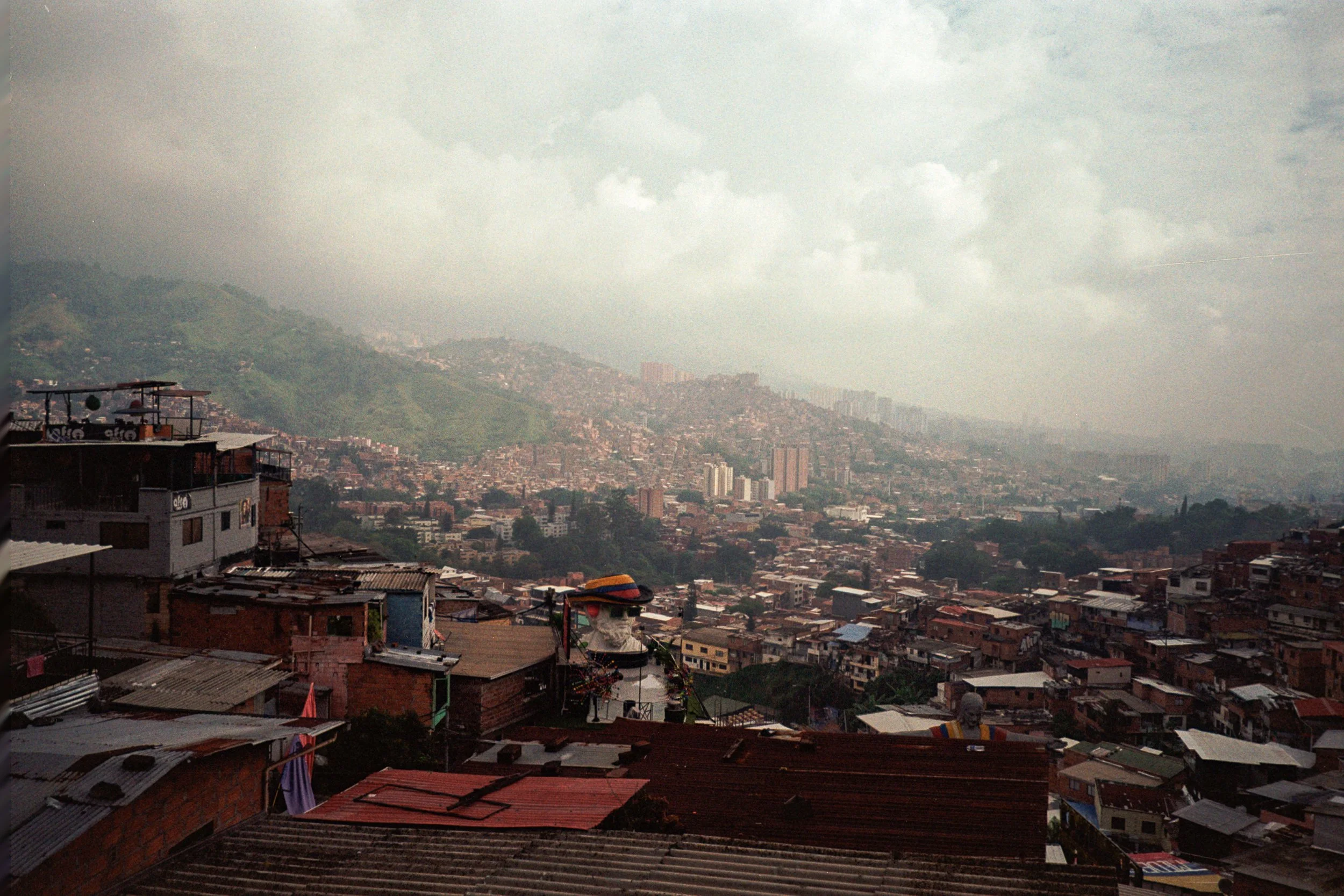
The view from Comuna 13
To get to our lunch spot, we took an Uber. Not as immersive but interesting anyway. Our driver took us this way and that, no route seemed direct. Traffic was heavy all day. At stoplights, we sat in a line of cars and trucks while motos poured past. They’d squeeze into every gap and even hop onto the sidewalk if it meant getting to the front. Hundreds of them on every street, many short enough to stand over. A contrast to the large leisure bikes in the US, these little motos were essential for most commuters. I admired the style and agility.
From inside the Uber, I looked out at more of the city. What’s it like to live here, to grow up here? What do people look forward to, what makes Colombians happy? Two lanes over, a first generation Montero rolled by. That made me happy. The cars of yesteryear were plentiful here. I looked at the driver and thought, we likely don’t have many shared experiences, but we’ve both been behind the wheel of this old 4x4 and felt the boxy, cramped metal tank bobble down the road.
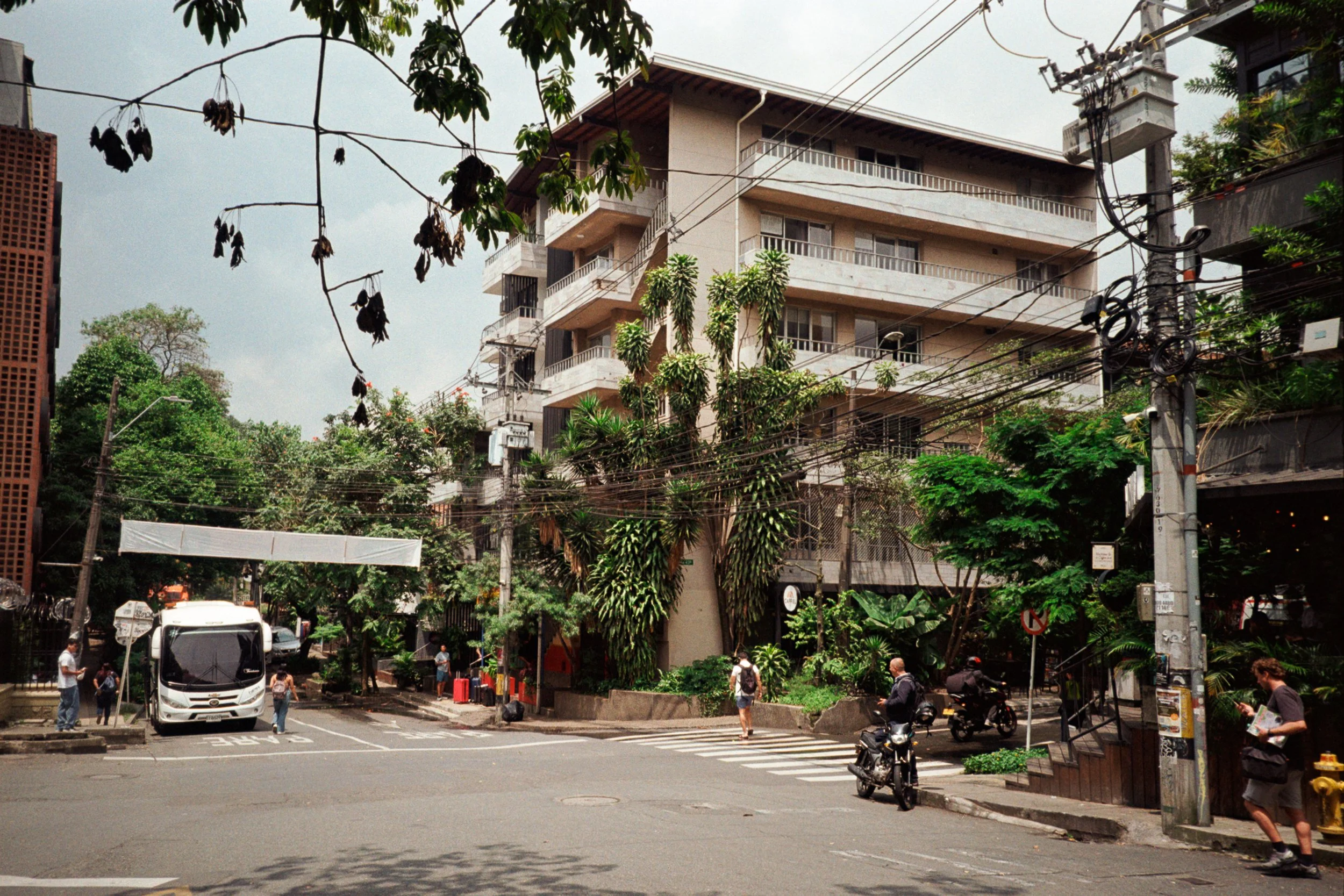
The urban mixture of concrete and greenery
The next day we packed into a passenger van, on the highway out of town. Well, a highway for most, but for others it was an alley, a crosswalk, a repair shop, a tractor route, or a shopping spot. The activity along this route was different around turn. Some scenes entertaining and some more bleak. From the highway, we saw some of the poorest areas in the city - seas of various building materials stitched together to make shelter. Perched high on the edge of a muddy bank and cascading down to the very edge of the asphalt, thousands of homes were standing at the will of nature. Some had indeed given in to the elements. In places, small ravines of flattened sheet metal, corrugated plastic, plywood, glass, and cardboard were creased into the hillside.
The van continued, beyond the outskirts of the city and into the countryside, to a small coffee farm in the lush mountainside. It jerked to a halt on a narrow incline and for the next few hundred yards, we walked along a muddy trail. A series of modest and beautiful open wood structures formed the core of the farm where we had booked a tour. Donkeys, dogs, employees and their children all lived here in a seemingly idyllic and rustic harmony. As part of the tour we were given rubber boots and a traditional farmer getup. After a we were split into English- and Spanish-speaking groups, we got to work.
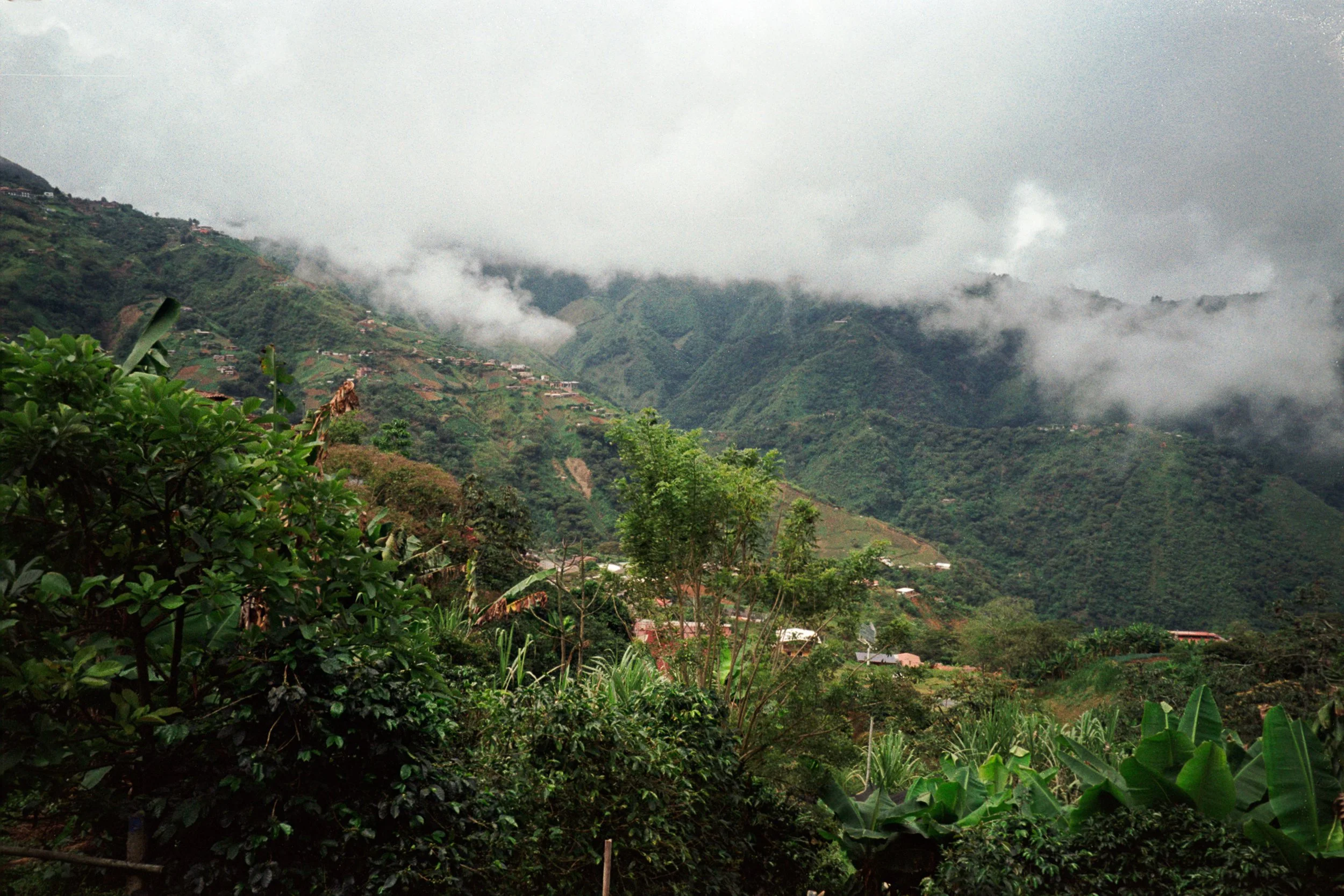
The countryside coffee farms
Down into the wet hillside we went, looking for ripe beans to pick. I held firmly to a tree, bending it nearly in half, just to keep from sliding further downhill. I managed to gather less than a dozen decent beans in the basket tied around my waist. Thankfully, the farm doesn’t rely on tourists for their labor. But they do rely on humans. The inaccessibility of the farm and the steep muddy slopes make it difficult for large scale or mechanical farming operations. To me, these natural limits only increase the coffee’s value.
Despite the terrain, the tropical climate in Medellín and its proximity to the equator make it ideal for agriculture. Some exports have been more notable than others, to say the least. It can be easy to reduce Colombia to its most infamous one, but as we got to see firsthand, Colombia is more than its stereotypes.
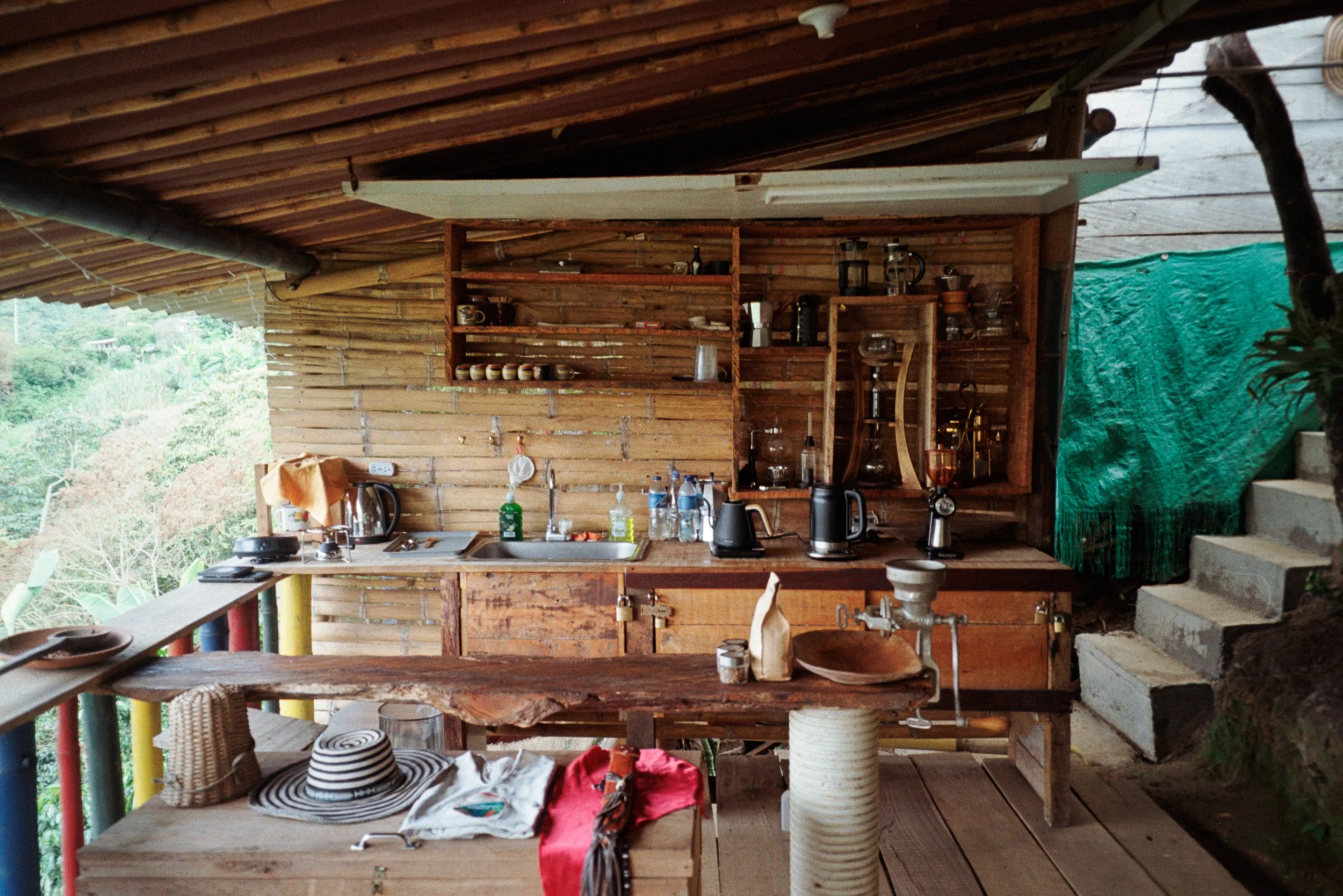
Where we got lessons on roasting, grinding, and brewing - and lots of samples
Back at our hotel, we were on our phones searching for a dinner spot. With a few options noted nearby, we wandered into the neighborhood nearby and again were immersed into the local city life. We walked by the open doors and windows of the residents, their living rooms just a few feet from the sidewalk. At the center of the neighborhood was a small park with restaurants, street vendors, kids playing, people out and about. Distinctly non-American. Several patios and shops opened up to face the park. By this time, I’d familiarized myself with the Colombian beer, Cerveza Aguila, which paired well with a cheeseburger. We’d decided not every meal had to be local cuisine. As the sun set, we strayed further into the surrounding streets.
Around one corner, we veered off the sidewalk into the street to avoid disrupting a few older men playing cards at a plastic table. Like they’ve been sitting there every day for thirty years. I took it all in, romanticizing all the non-routine adventures. Another Cerveza Aguila and Aguardiente (another local drink I became acquainted with), please.
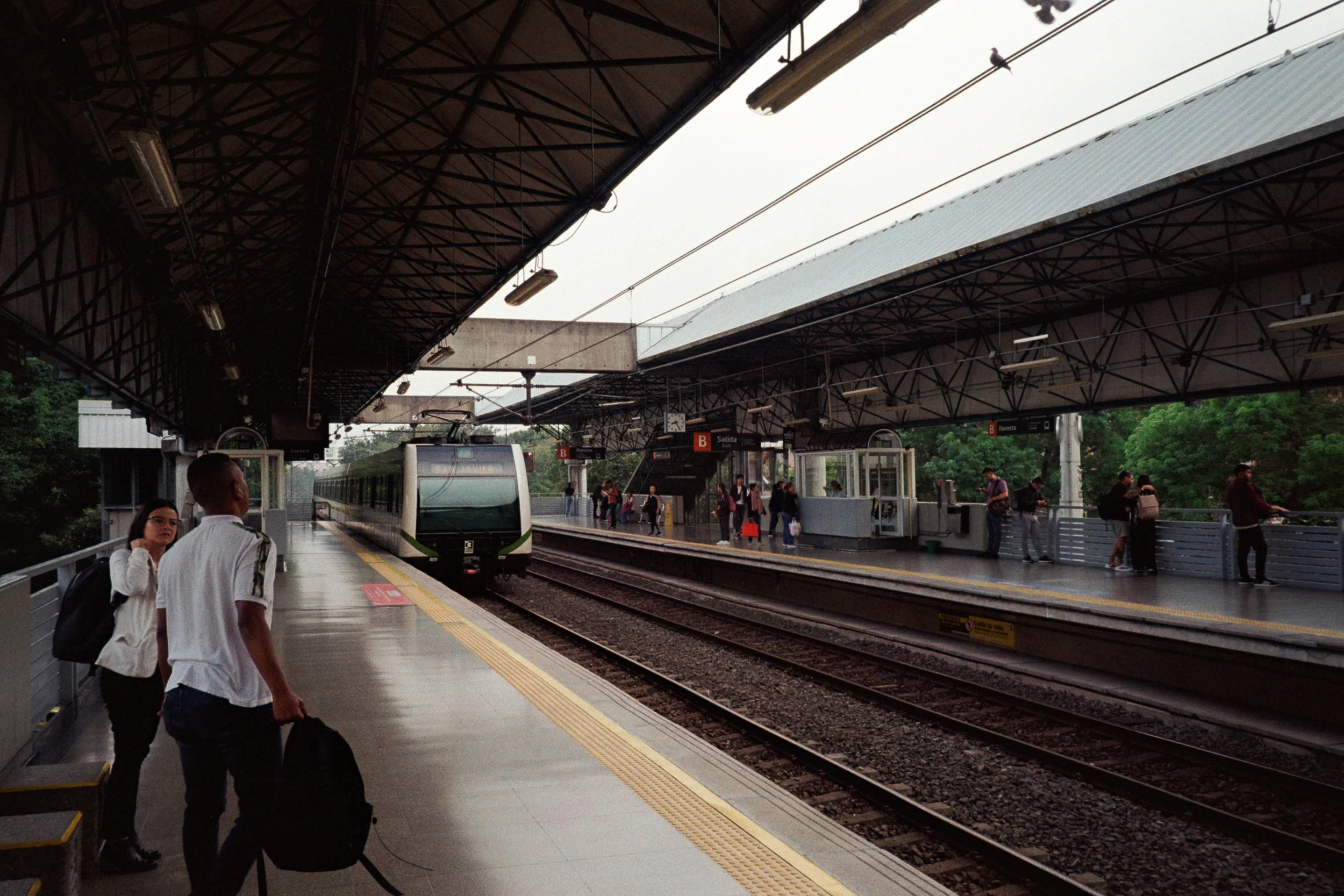
The metro - another method of public transit we used
Travel seems so inherent to humanity in many ways. Most humans haven’t had the chance to fly around the world, of course, but travel is in every piece of history. Relationships, trade of goods and ideas, of disease and medicine. Our phones give us a portal to anywhere at anytime, but it can’t replace face to face or engage all senses. It can’t replace holding onto the plastic strap hanging from the metal bar that’s fastened to the ceiling of the train car chugging along, while you lean so slightly on your fellow passengers at your shoulder. It can’t replace sprinting across a plaza, umbrella in hand but hardly stopping the downpour of afternoon rain as you try to catch a taxi. It can’t replace sitting on a rooftop having a gin and tonic in a goblet of a glass, while you look out at the dark night, tiny specks of light dotted like stars across hills in every direction. You feel small and you don’t think of yourself or your phone. You think of the humanity around you. That across this earth, each of us faces our own challenges every day. And nothing has changed since the beginning. We try to survive. And do well. And have grace for those around us.
This was my first international trip with Mattie. It was her brave suggestion to go. I was initially hesitant but then got swept up with the idea. I had to say yes. Her Spanish was more than serviceable (much more than she gives herself credit for) and helped us in almost every situation. We each shot some film and when we got home, developed and scanned it. Mattie bought a photo album. In the months after getting home, we printed 20 frames from our negatives in the home darkroom to go in it. When I look back at these prints, there we are, on an unforgettable trip because we shared it. Medellín will always hold that mythical place in my mind, and I can revisit anytime.
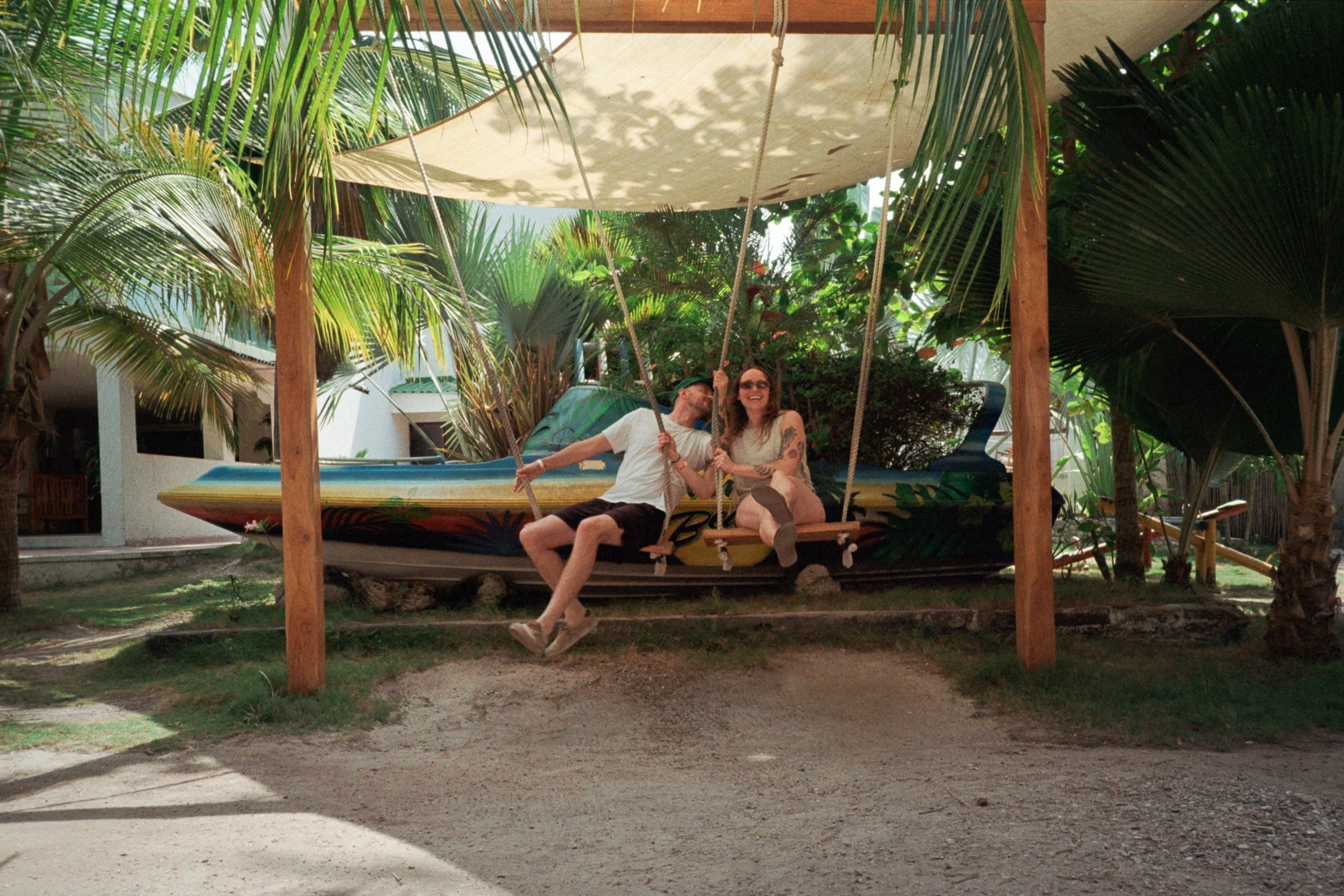
Beach day in Cartagena
